The United States is struggling with a severe housing crisis, with shortage estimates often exceeding 4 million units. Nowhere is this crisis more visible than in New York. While the nation struggles to scale, New York City faces an immediate need for 500,000 new residential units to keep pace with rising demand. From skyrocketing real estate costs to restrictive regulatory red tape, the development path is fraught with obstacles. One often underestimated barrier is local community opposition. By addressing the “Not In My Backyard” (NIMBY) sentiment, we can begin to dismantle one of the many roadblocks to sustainable urban growth.
NIMBY opposition is a complex reaction to fears of traffic congestion, infrastructure strain, and shifting property values. However, an often underestimated point of opposition is the threat to neighborhood character. Architectural aesthetics can significantly sway community support; when a building looks “ugly” or out of place, opposition skyrockets. By prioritizing visually congruent design and “building beautiful,” developers can transform a project from a perceived intrusion into a welcomed community asset, effectively dismantling one of the most stubborn barriers to housing growth.
I am Jorge Fontan, an architect in New York and owner of Vinculum Architecture, a Manhattan-based architecture firm. At Vinculum, we work on a variety of project types, including new residential developments. In this article, I will address the connection between NIMBYism and architectural design aesthetics, drawing on a recent study and my personal experience with projects in New York City. I was inspired to write this post by an article on Vox titled “Can America Build Beautiful Places Again”.
The Aesthetics Problem With Buildings
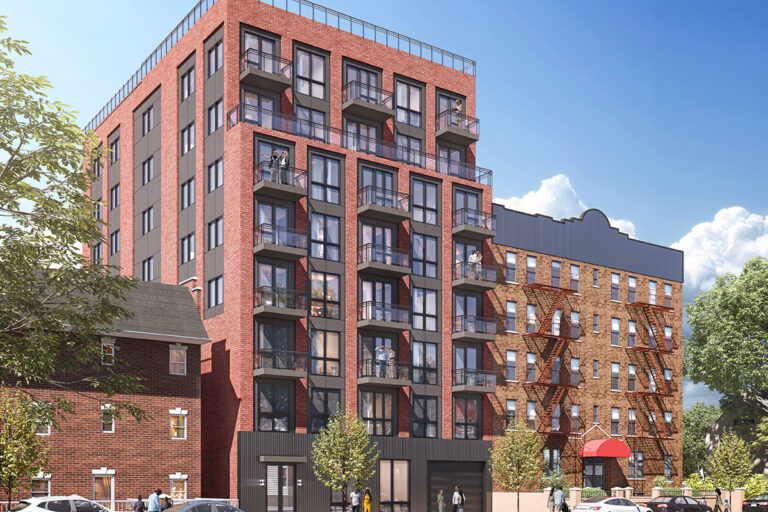
Although construction of new residences has not kept up with demand, there has been plenty of development over the last few decades. You can see examples of entire neighborhoods being completely transformed by new development. The question is how much of that development actually looks good?
Are aesthetic quality and neighborhood character being sacrificed for speed and profit?
If you look at a neighborhood like Long Island City, you can see so many new buildings with little architectural character. Many of the buildings look like they were designed by a second-year architecture student, with no consideration for massing, facade design, context, or any architectural sensibilities. The reason is that these buildings are not designed to be beautiful. That is not their goal. The goal of these buildings is to maximize profit and minimize loss for the developer and their investors.
As an architect, I can assure you of one fact: I cannot design a good building without a good client. The people we work for set the project’s tone and goals. As the architect, it is my job to provide them with a building that fits their goals. Very few of my prospective clients call my office saying they want to make something beautiful that is good for the neighborhood. I will use an example project in which a client prioritizes aesthetics later in this article.
Community Opposition and Context
“And NIMBYs are not wrong to feel that even if we are not the ones living in a new building, if it’s in our neighborhood or broader daily environment, we still live with it.” Marina Bolotnikova, Vox, “Can America Build Beautiful Places Again?”
People feel a strong connection to their neighborhood aesthetics and do not want to see a grotesque change. This seems like a reasonable stance. That is why it is so shocking how much visually offensive architecture is proposed and built across New York and the United States.
One would think that finding a balance between the development’s success and the happiness of the community would be a win-win for all parties involved.
A study titled “How Sociotropic Aesthetic Judgments Drive Opposition to Housing Development” by David Broockman, Christopher S. Elmendorf, and Joshua Kalla determined that aesthetics has a significant impact on public support for new developments. The results of their study are not surprising. They concluded that people are less likely to support development in their community if they consider it visually unappealing.
Our findings suggest that for many voters, the questions they ask about development are often not “How will this affect my pocketbook?” or “Who will be moving into my neighborhood?” and more “How will it look?”
The Importance of Design
We recently mourned the loss of a great architect, Robert A.M. Stern. I was fortunate enough to work for Bob when I was beginning my career. Bob was a great architect whose buildings are the quintessential examples of context and beauty. Bob once said in an interview, “I grew up in the city, in Brooklyn, and to me the skyline of Manhattan seen from the subway train going into Manhattan was one of the most remarkable things imaginable. … I tried to recapture some of that feeling.” When you walk around, do you think that new buildings today are in line with this belief?
People care about design; they care about context. You can make a modern building, it can even contrast, but it should feel like it belongs. Another one of my favorite Bob Stern quotes is “Buildings shouldn’t look like Lady Gaga”. We should make buildings that people are happy to welcome into their community.
Obtaining Community Support for a Rezoning in Bay Ridge, Brooklyn
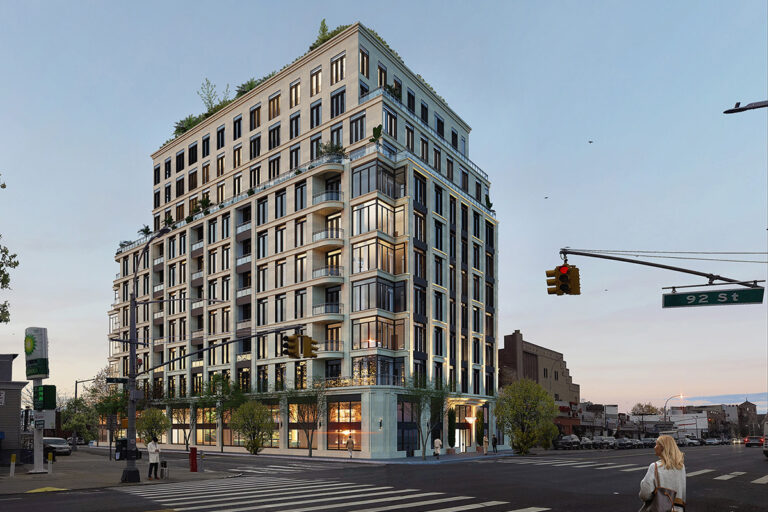
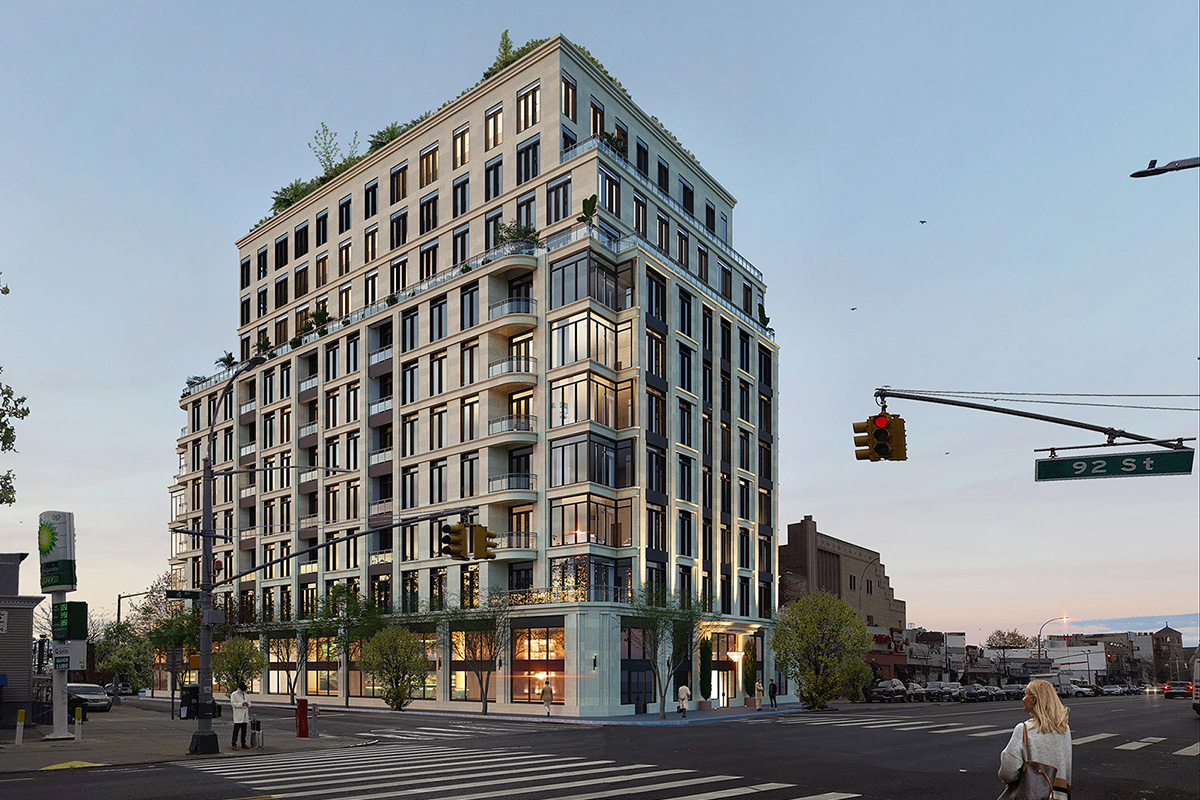
In January 2026, I presented our design for a proposed 97-unit apartment building to a Brooklyn community board, a larger, taller development than the surrounding neighborhood. The community board voted almost unanimously in favor of our development. If I recall, only two or three people voted against the project. One particular point is that I am very familiar with this community board, and they have a reputation for voting against almost every development they see. So how did we manage to obtain so much support?
When the property owner first hired me, he told me he wanted to build “the best building in Bay Ridge”. He emphasized that the building should be of high quality and that penny-pinching budgets will not limit us. The developer gave us the freedom to design without micromanaging the process and gave me little to no comments on the architecture. He allowed us to make architecture. He let us design. The developer of this project told me he wanted “to make a building the community can be proud of.” As an architect, I can tell you I do not hear this as often as I hear people say they want to keep costs down and build quickly.
We designed this building with the goal of making a building that people would like. That was it. I am happy to report that community members appreciate the design. At the two community board meetings, multiple people from the community commented on how much they liked the aesthetics, and others agreed. I even had members of the community come to me directly after the meetings to tell me how much they enjoyed it and how happy they were that it had been approved. This mindset is such a simple idea, yet so many architects and developers do not understand it. If the people like the building design, they are more likely to support it.
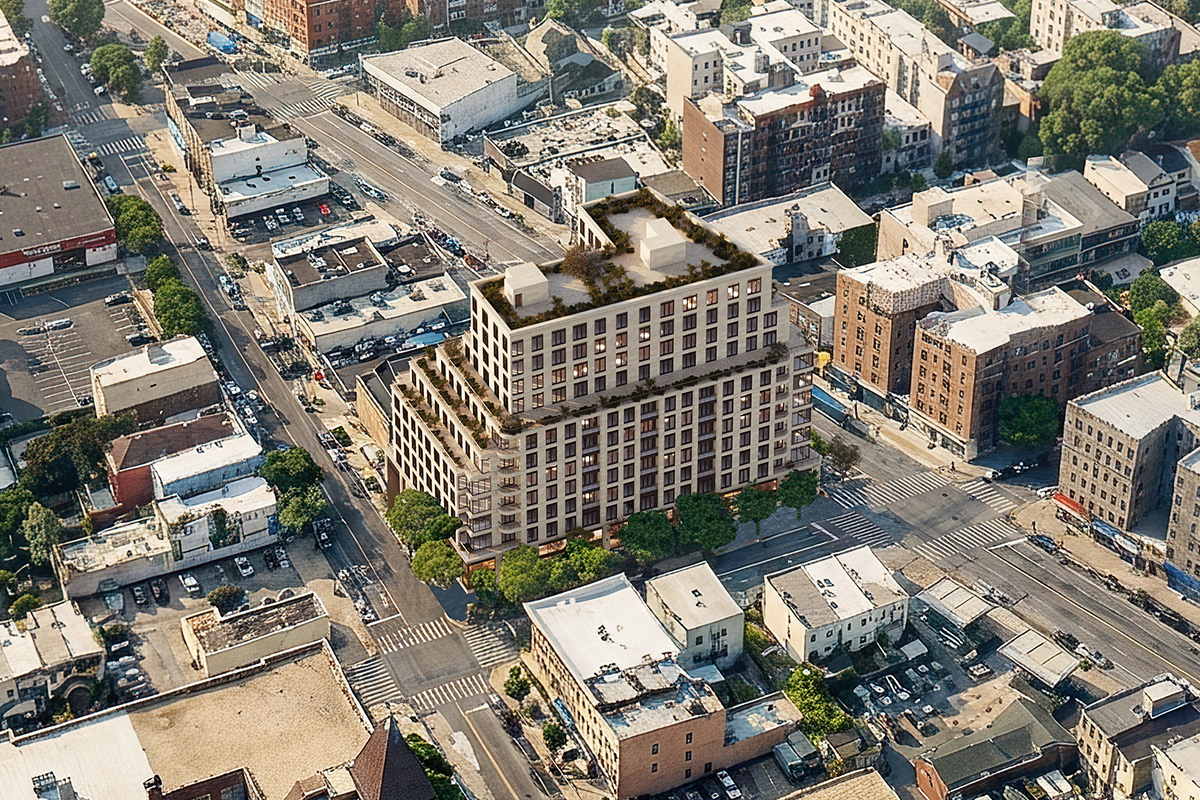
New Building Design for Rezoning in Brooklyn
Using Good Design to Address the Housing Crisis
I am not suggesting that architectural design alone can solve all of the housing problems. Not by any means. As an architect working on various residential developments, I can say this is one easy and impactful way to make a bit of an improvement. In the previously given example, the property cannot currently be developed for residential use due to the site’s zoning regulations. We are requesting a rezoning, a discretionary action that changes zoning, so we can build this almost 100-unit building.
We successfully obtained community board and local government support. We should have our final approvals within months, and then we can proceed with the building development. This building is a win for housing as it will provide almost 100 units, with 25% being affordable fixed-income apartments. This building is a win-win for everyone. The market-rate units will create profit for the developer, which incentivizes him to build. We propose a 25% affordability requirement to meet the city’s affordability requirements, and the community gets a building design they like. This project is a great case study on how developments should work.
Building Beautiful Buildings
We used to build beautiful buildings in this country and in New York. Many developers and architects lost sight of the importance of such aspirations. I believe we can reduce community opposition by creating buildings that everyone can be proud of, including the owners, the occupants, and the community. Creating this level of support requires an understanding of context, design, as well as listening and communication. At the end of the day, we need to build more housing, which often faces many challenges. Let’s reduce one simple challenge with good design.
If you are considering a development project, contact us at Vinculum Architecture for a consultation. We can help you determine the feasibility of your project, provide complete design services, and guide you through the intricate process of obtaining approvals to bring your vision to life. Succeeding in the real estate market requires a strategic approach to a complex regulatory environment balanced with great design. We offer both vision and expert architectural services.
Thank You for Reading Our Article on Using Design and Aesthetics to Minimize Community Opposition to Residential Developments
I hope this was helpful. If you would like to speak with an architect about a potential project, please get in touch with us directly at Vinculum Architecture.
Request a Consultation With Vinculum Architecture
This post was written by Jorge Fontan AIA a Registered Architect and owner of New York City based architecture firm Vinculum Architecture. Jorge Fontan has earned 3 degrees in the study of architecture including two degrees from the City University of New York and a Masters Degree in Advanced Architectural Design from Columbia University. Jorge has a background in construction and has been practicing architecture for 20 years where he has designed renovations and new developments of various building types.